7th November 2025
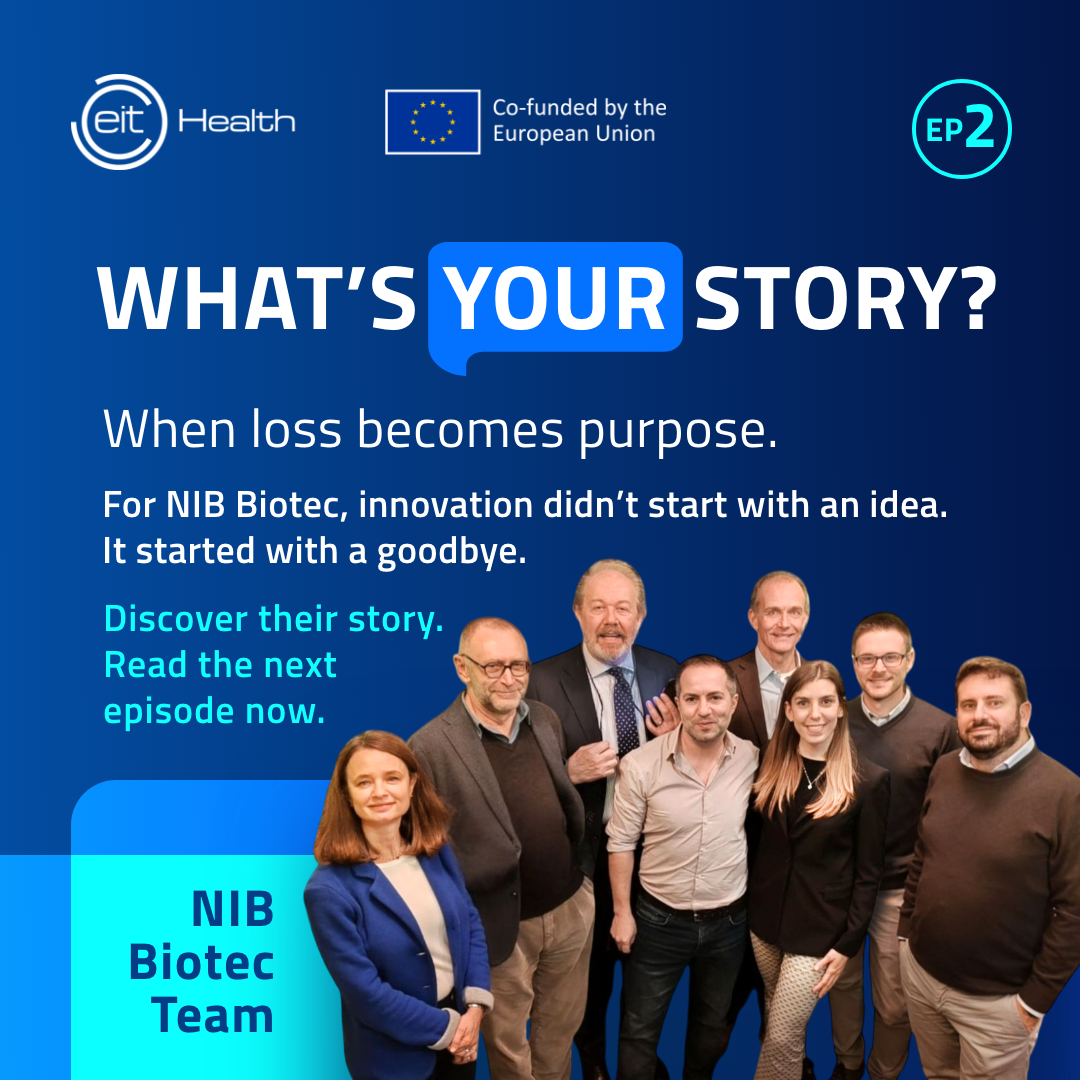
Some start-ups are born in co-working spaces. Others emerge from ambition, spreadsheets, and pitch decks. But some, like NIB biotec, are born from something deeper. At the heart of this Italian medtech start-up lies not just a business plan, but a personal mission. One that began not in a lab or a boardroom, but in a hospital corridor, during a moment that would shape a life.
“I was just a teenager when I lost my aunt to cancer. She was strong, and she fought hard. That experience stayed with me.” says Sergio Occhipinti, founder & CEO of NIB Biotec. “It was the reason I chose to dedicate my life to cancer research.”.
What followed wasn’t a sudden breakthrough, but a journey through academia and science. Over time, however, a realization took root: research is absolutely essential, but it’s not enough. There are promising results sitting in journals, in labs, in minds. What’s often missing is the courage, the drive, or the support to turn those results into real solutions for patients.
That belief became the foundation of NIB biotec. Instead of publishing yet another paper, the team of scientists trained in molecular medicine, analytical chemistry, and immunology asked a deceptively simple question: So what?
Beyond the bench: a shift in mentality
It is a familiar cycle in academia: years of painstaking research, results presented in peer-reviewed journals, accolades within the scientific community. But the team at the University of Turin felt the model was incomplete. “We were identifying biomarkers related to prostate cancer, but at some point, we realised—we weren’t saving lives. We were documenting a problem, not solving it.” That shift in perspective catalysed their journey from research to reality. Through an academic incubator, a hypothesis became a prototype. Their mission: to create a simple, accessible, low-cost test for early-stage prostate cancer screening. One that wouldn’t require expensive labs or highly specialised technicians. One that could be used anywhere, by anyone.
Their tool? A rapid urine test that detects molecular signatures associated with the presence of prostate cancer. Straightforward in theory, transformative in practice.
Science meets humanity
Innovation rarely happens in isolation. It begins with listening. Before building the product, the team did something many overlook: they spoke with patients. They listened to men who had endured long waits, unnecessary biopsies, and late diagnoses. They took notes not only on symptoms but on silence, on the gaps in care, on the delays that cost lives. These conversations became their blueprint.
Clinical studies followed. In one trial, involving 700 men due for biopsies, their test helped distinguish between individuals likely to have cancer and those who could potentially avoid invasive procedures. A second study confirmed the findings: in nearly half of the cases, unnecessary biopsies could have been avoided had the test been available.
And now, they are preparing for the next phase: developing an industrial version, aiming for CE marking by 2027, and launching further studies across Europe to validate the technology in diverse healthcare settings.
Building the right team, not just the right test
Turning a lab project into a real-world solution required more than molecules. It required minds from outside the lab. Paolo, a business developer, Tommaso and Francesca, two biomedical engineers, joined the core scientific team, followed by clinical, regulatory, legal and finance experts. “We had to either change our mindset or change the team. We chose both,” they recall.
This blend of academic rigour and entrepreneurial pragmatism redefined their workflow. “In research, you chase perfection. In start-ups, you chase progress. You release, you test, you learn, you repeat. The product doesn’t become perfect in theory; it becomes better in the real world.”
Connecting beyond borders
In 2024, NIB biotec earned second place in EIT Health’s InnoStars Connect programme, an initiative designed not just to fund, but to foster cross-border collaboration, critical feedback and commercial validation for early-stage healthcare innovations.
“The recognition meant a lot, but the real value was in the community. We had the chance to connect directly with a major diagnostics company. The feedback we received helped us sharpen not just our product, but our entire approach to the market. It was a safe space for real dialogue. That kind of access is rare and essential.”, underlines Occhipinti.
In many ways, NIB biotec embodies a new generation of healthcare innovators. They are not chasing unicorn status but building a resilient, enduring, and focused organisation on long-term impact. Their solution doesn’t just detect disease. It points to a different philosophy: democratising access, decentralising diagnostics, and humanising innovation.
The road ahead: changing the system, one test at a time
As they prepare for large-scale trials, regulatory approvals and future partnerships, the team remains grounded in the story that started it all. “This has always been about people. About not letting someone else go through what my family did. And about making sure science doesn’t stay in the lab, but walks out the door and into someone’s life.”
In a healthcare landscape still riddled with inequality, NIB biotec’s mission is both simple and radical: early detection should be a right, not a privilege. Their story is a reminder that innovation doesn’t need to be loud to be life-changing. Sometimes, it starts with a quiet question: So what? And if you’re brave enough to answer it, it can change everything.
EIT Jumpstarter 2026
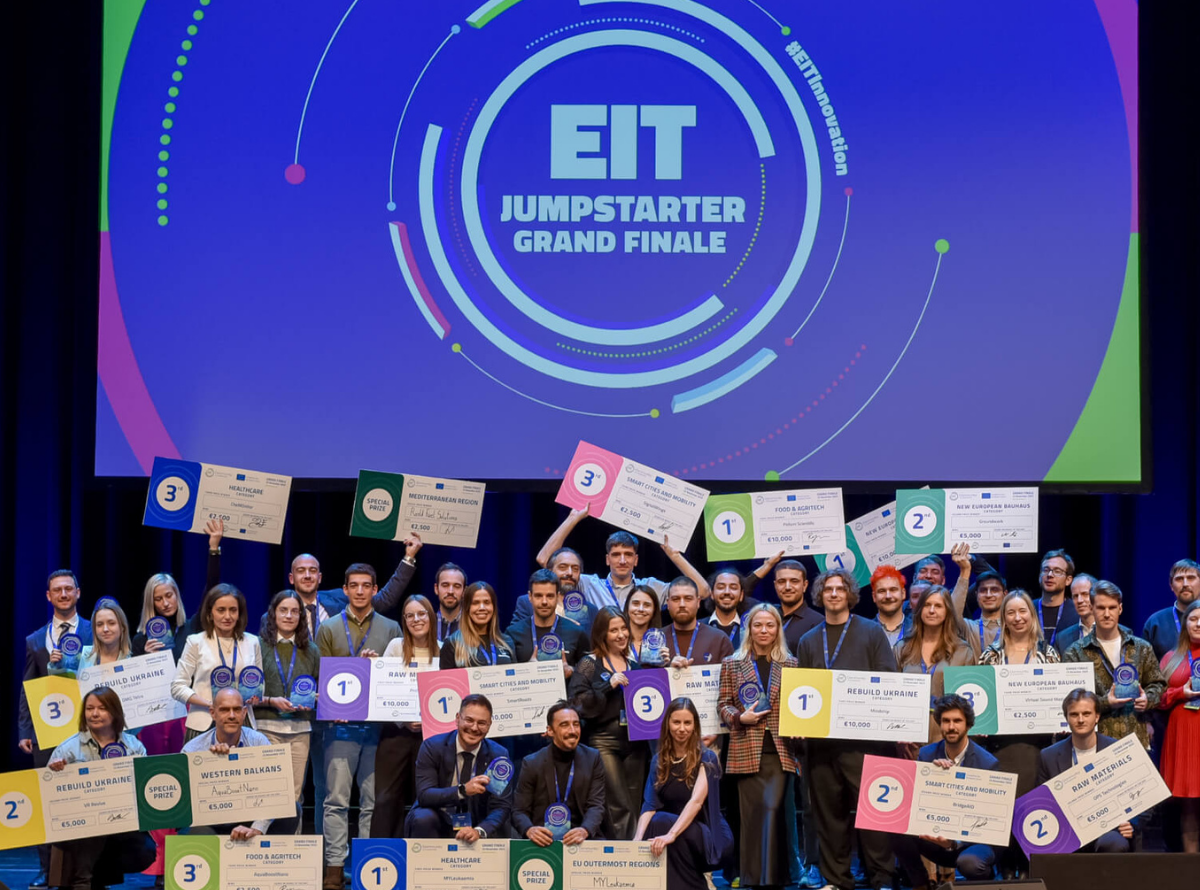
EIT Jumpstarter 2026 opens applications for healthcare innovators
Europe has the science to lead the world in biotech – but structural barriers are holding it back, experts say

Launch of EIT Health Biotech Think Tank report